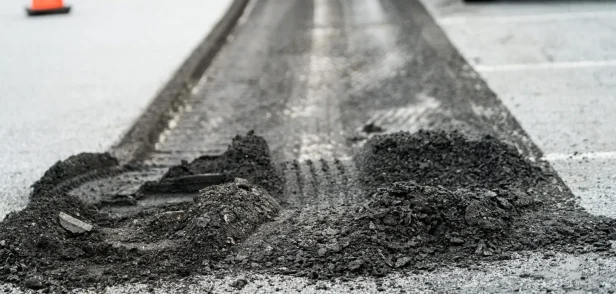
Asphalt milling is the process of removing the top layer or selected depth of damaged asphalt with specialized milling equipment while preserving the underlying base when it is still stable. This method is commonly used to prepare roads, parking lots, driveways, and other paved surfaces for a new, smooth asphalt layer.
By removing worn or damaged asphalt without tearing out the entire pavement structure, milling can help restore the surface more efficiently. It also allows existing asphalt materials to be collected, recycled, or repurposed, making it a practical option for pavement maintenance in Georgia.
How Does Asphalt Milling Work?
Asphalt milling starts with evaluating the existing pavement to determine how much of the asphalt surface needs to be removed. In many cases, milling is used when the top layer of asphalt is worn, uneven, cracked, or damaged, but the underlying base can still be preserved.
Before milling begins, the surface is prepared by removing obstructions, cleaning the work area, and reviewing the condition of the pavement. A milling machine is then used to grind and remove the damaged asphalt to the needed depth. Depending on the condition of the pavement, this may involve removing only the top few inches or milling to a more specific depth for the project.
Once the damaged layer is removed, the milled asphalt can be collected and repurposed for future pavement work. Any weak or damaged areas underneath the surface may also need to be repaired before fresh asphalt is installed. After the surface is prepared, new asphalt can be applied, compacted, and finished to create a smoother, safer, and more reliable pavement surface.
Why Opt for Asphalt Milling?
The primary benefit of asphalt milling is its environmental friendliness. The milled material can be recycled and reused, significantly reducing the environmental impact and need for new materials. This sustainable approach aligns well with modern eco-friendly initiatives and cost-effective construction practices.
When Is Asphalt Milling Used?
Asphalt milling is often used when pavement has surface-level damage but does not require complete excavation. It can be a good option for parking lots, roads, drive lanes, and other paved surfaces that have become uneven, worn, or damaged over time.
Milling may be recommended when the pavement has ruts, rough texture, drainage-related surface issues, pothole damage, or areas where the top layer of asphalt has started to break down. By removing the damaged surface layer, contractors can prepare the pavement for new asphalt without tearing out the entire structure.
However, milling is not always the right solution for every pavement issue. If the base or sub-grade underneath the asphalt is unstable, the project may require additional surface repair, reclamation, or deeper reconstruction before new asphalt is applied.
The Process of Asphalt Milling
Asphalt milling starts with inspecting the existing pavement to determine how much of the surface needs to be removed. Contractors look for worn asphalt, uneven areas, drainage issues, cracks, potholes, and other signs of surface deterioration. This helps determine whether the pavement only needs the top layer removed or whether deeper repairs may be needed before new asphalt is installed.
Once the project area is prepared, a milling machine grinds and removes the damaged asphalt surface to the required depth. In many cases, this means removing the top few inches of asphalt while preserving the underlying base when it is still stable. The milled asphalt is then collected so it can be recycled or repurposed for future pavement work.
After the damaged surface layer is removed, the exposed area is checked for weak spots or base issues. If needed, those areas are repaired before fresh asphalt is applied. The new asphalt is then installed and compacted to create a smoother, more even surface. Depending on the project, final steps may also include line striping, pavement markings, or other finishing details to make the surface safe and ready for use.
Is Asphalt Milling Right for Your Pavement?
Asphalt milling is more than a repair method; it’s a sustainable, cost-effective solution for maintaining pavements. Choosing asphalt milling means embracing an environmentally responsible, efficient, and economical approach to pavement management. With the right expertise, asphalt milling can significantly enhance the longevity and functionality of paved areas.
Looking for a reliable and eco-friendly solution to enhance your pavement’s longevity? Discover the benefits of asphalt milling in Atlanta, GA. Our expert team at Blackjack Paving is ready to transform your roads, parking lots, and driveways with precision and care. Don’t wait for minor wear and tear to become major headaches. Contact us today and take the first step toward a smoother, more durable pavement with our top-tier asphalt milling services. With Blackjack Paving, your journey to revitalized pavement begins here!