Potholes aren’t just unsightly. They pose potential trip hazards and can cause vehicle damage, particularly in bustling, busy areas. If you are a property owner who offers parking lot services in Atlanta, GA, providing a top-notch paved surface is not just a need but a priority.
Getting to the Root of Pothole Problems
So, what causes pesky potholes? Usually, it’s a mix of water getting under the surface of your asphalt, the ever-changing Atlanta weather, and the usual wear from constant traffic. Tackling these issues early is critical. That’s where crack filling in Atlanta, GA, prevents minor surface issues from blooming into full-blown potholes.
Your Pothole-Fighting Arsenal
For repairs, the right tools and materials make all the difference. We offer premium asphalt crack filler in Fairburn, GA, which is your best bet for a repair that lasts and blends seamlessly with your existing pavement.
Temporary vs. Permanent Patching: Which One Do You Need?
Not all pothole repairs are built to last — and knowing the difference before you call a contractor can save you from paying twice for the same fix.
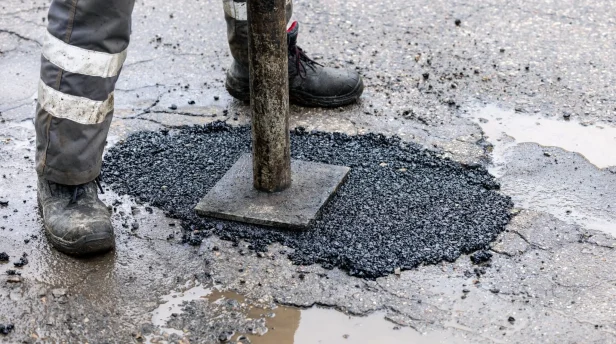
Temporary patching closes a pothole quickly without solving the underlying problem. Contractors use it when weather won’t allow a proper repair, when a hazard needs same-day attention, or when a permanent fix is already scheduled but can’t happen right away. The process is simple: clear debris, shovel in cold mix asphalt, and compact it by hand or with a plate compactor. There’s no tack coat and no bond to the surrounding pavement — just enough material to level the surface and stop the damage from spreading. That’s also its weakness: temporary patches typically loosen within weeks to a few months under traffic and water intrusion.
Permanent patching fixes the actual failure point. A proper repair saw-cuts a clean edge around the damaged area, excavates the failed asphalt (and base material if needed), applies a tack coat to bond new material to the existing pavement, and installs hot mix asphalt in compacted lifts. Done correctly, this type of patch is structurally tied into the surrounding surface and can last as long as the pavement itself — often 8-15 years.
How to tell which one you’re getting
If a contractor offers same-day repair in cold or wet weather, or the price seems low for the damage, ask directly whether it’s temporary or permanent. A temporary patch isn’t a bad thing — it’s often the right short-term call — but it should be labeled that way, with a clear plan for the permanent fix.
Cold Mix vs. Hot Mix Asphalt: What’s the Difference?
The material used to fill a pothole matters just as much as the repair method — and it’s one of the most overlooked factors property owners ask about.
Cold mix asphalt is a pre-packaged product that stays workable at ambient temperatures, which is what makes it useful for emergency repairs. It can be applied in cold, wet, or off-season conditions when hot mix plants aren’t running, and it doesn’t require any heating equipment on-site — just shovel, compact, and go. The trade-off is durability: cold mix has lower density and a weaker bond than hot mix, so it’s more prone to raveling and cracking under traffic, and it typically holds up for only weeks to a few months in a high-traffic commercial lot. It’s best understood as a temporary or emergency material, not a long-term fix.
Hot mix asphalt (HMA) is heated to roughly 300°F and mixed with aggregate at a plant, then transported and compacted while still hot. That heat is what allows the binder to properly coat the aggregate and bond tightly as it cools. The result is much higher density, stronger adhesion to existing pavement, and far better resistance to water intrusion and wear — which is why it’s the industry standard for permanent repairs. The catch is that it must be installed while still hot, limiting its use in extreme cold or wet weather, and it requires access to a plant and proper compaction equipment.
How to Fix a Pothole: 3 Quick Steps for Easy Repair
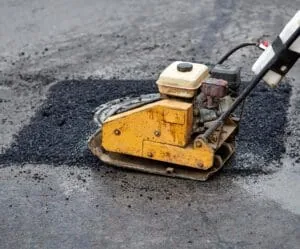
Clean-Up Time: Kick things off by getting rid of all debris. A clean pothole is a ready-to-fix pothole.
Fill ‘Er Up: Next up, bring in the asphalt crack filler. Compact it down to say goodbye to any future troubles.
Seal the Deal: Finally, a protective seal over the repaired area keeps water and further damage at bay.
When You Need the Pros
Sure, a DIY approach could work, but getting the pros involved is a game-changer for real, long-lasting results. Blackjack Paving offers professional services and solutions to keep your pavement in tip-top shape for years.
Wrap-Up: Don’t Let Potholes Put a Dent in Your Day
Pothole repair is more than a quick fix; it’s about knowing your terrain and tackling the problem with expertise. For that smooth, safe, and visually appealing parking lot or driveway, contact Blackjack Paving. We’re all about delivering results that look good and last a long time. Call us today at (678)-364-9696 for your pavement needs, and watch those potholes become a thing of the past!